Cape Cod Waterfront vs Inland Homes: What the Premium Actually Costs in 2025
Analysis of 311 waterfront and 3,153 inland home sales reveals waterfront premiums ranging from $9,000 to $3.4 million depending on town—with village-level data showing exactly where your money goes.
If you're house hunting on Cape Cod, you've probably wondered: what does waterfront actually cost compared to inland? The answer isn't what most buyers expect—and it varies dramatically by town.
As a Cape Cod real estate broker specializing in waterfront properties, I analyzed every single-family home sale across all 15 Cape Cod towns in 2025 to give you the definitive answer. The data comes from 311 waterfront sales and 3,153 inland sales recorded in the MLS from January 1 through December 27, 2025. Here's what the numbers reveal.
Before we dive into the numbers, let's clarify three key terms:
Waterfront Premium: The dollar difference between the average waterfront sale price and the average inland sale price in a given town. For example, if waterfront homes in Chatham average $5,246,953 and inland homes average $1,852,092, the premium is $3,394,861—the additional cost you'll pay for direct water access.
Average Price: The total of all sale prices divided by the number of sales. Averages can be skewed by ultra-high-end outliers. If nine homes sell for $1 million and one sells for $10 million, the average is $1.9 million—higher than what most buyers actually paid.
Median Price: The middle sale price when all transactions are arranged from lowest to highest. The median is often more representative of what a "typical" buyer paid because it's not affected by outliers. In the example above, the median would be $1 million.
Throughout this analysis, I provide both average and median prices so you can see the full picture. When average and median are close together (like in Chatham), it indicates a consistent market. When they're far apart (like in Bourne), it reveals a market with both bargain properties and ultra-luxury outliers.
The waterfront premium on Cape Cod in 2025 ranged from essentially zero to over $3 million—depending entirely on where you buy.
Chatham commands the highest waterfront premium on the Cape: $3,394,861. The average waterfront home in Chatham sold for $5,246,953 in 2025, while inland homes averaged $1,852,092. Most of these waterfront sales were in Chatham proper, with a handful in North Chatham along Pleasant Bay.
At the opposite extreme, Truro has virtually no waterfront premium at all. Waterfront homes averaged $1,128,272 versus $1,119,024 for inland properties—a difference of just $9,248. This is the smallest premium anywhere on the Cape, making Truro one of the best values for buyers seeking direct water access.
And then there's Provincetown, where the data reveals something completely unexpected: inland homes actually cost more than waterfront. The average inland sale price was $1,473,724 compared to $1,342,510 for waterfront—a negative premium of $131,214. The reason? High-end condominiums along Commercial Street (technically inland) command premium prices, while many waterfront properties are seasonal cottages with limited year-round appeal.
Upper Cape
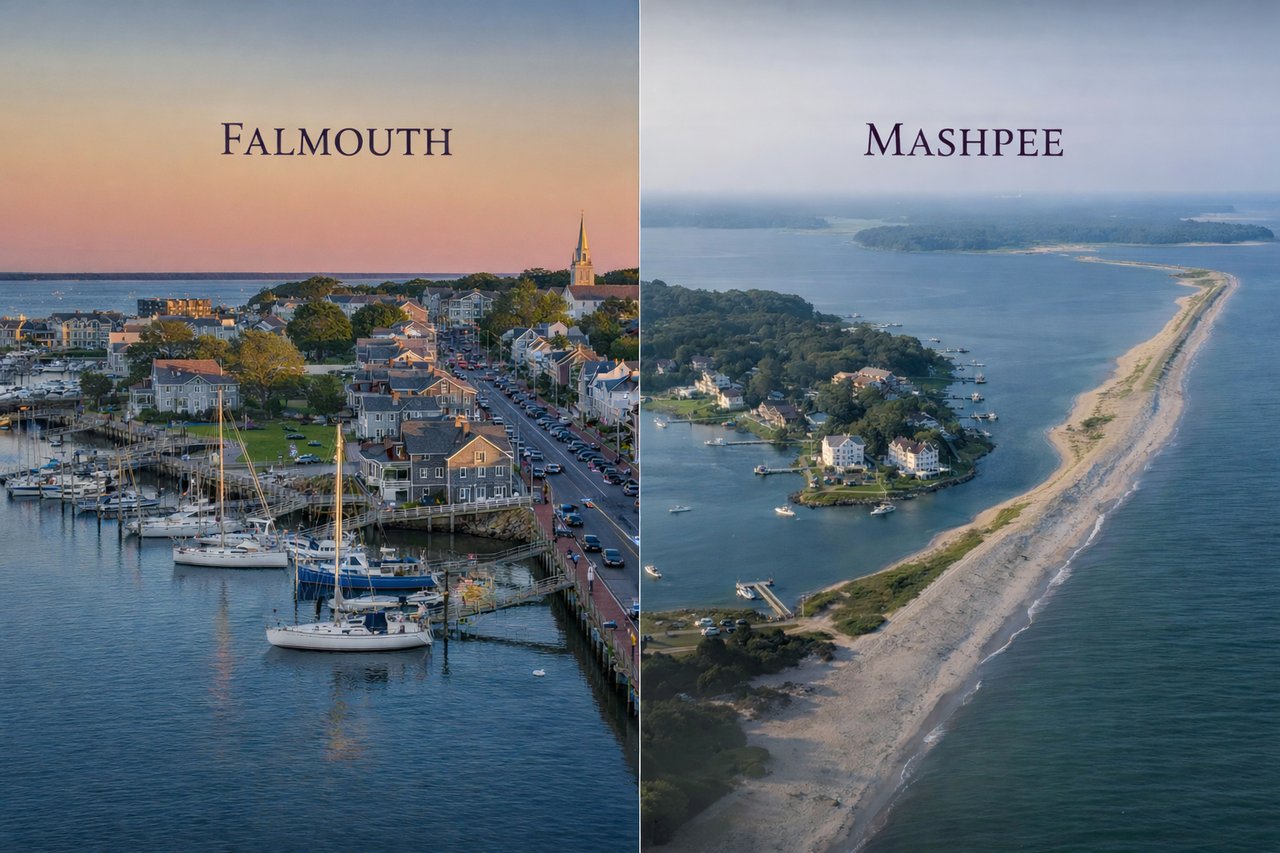
Falmouth recorded a $1,242,226 waterfront premium, with waterfront homes averaging $2,186,254 compared to $944,028 for inland. East Falmouth dominated the waterfront market with 26 of the town's 47 waterfront sales, reflecting the concentration of properties along Vineyard Sound and Bournes Pond. Inland sales were also heaviest in East Falmouth (185 sales), followed by Falmouth proper (90 sales).
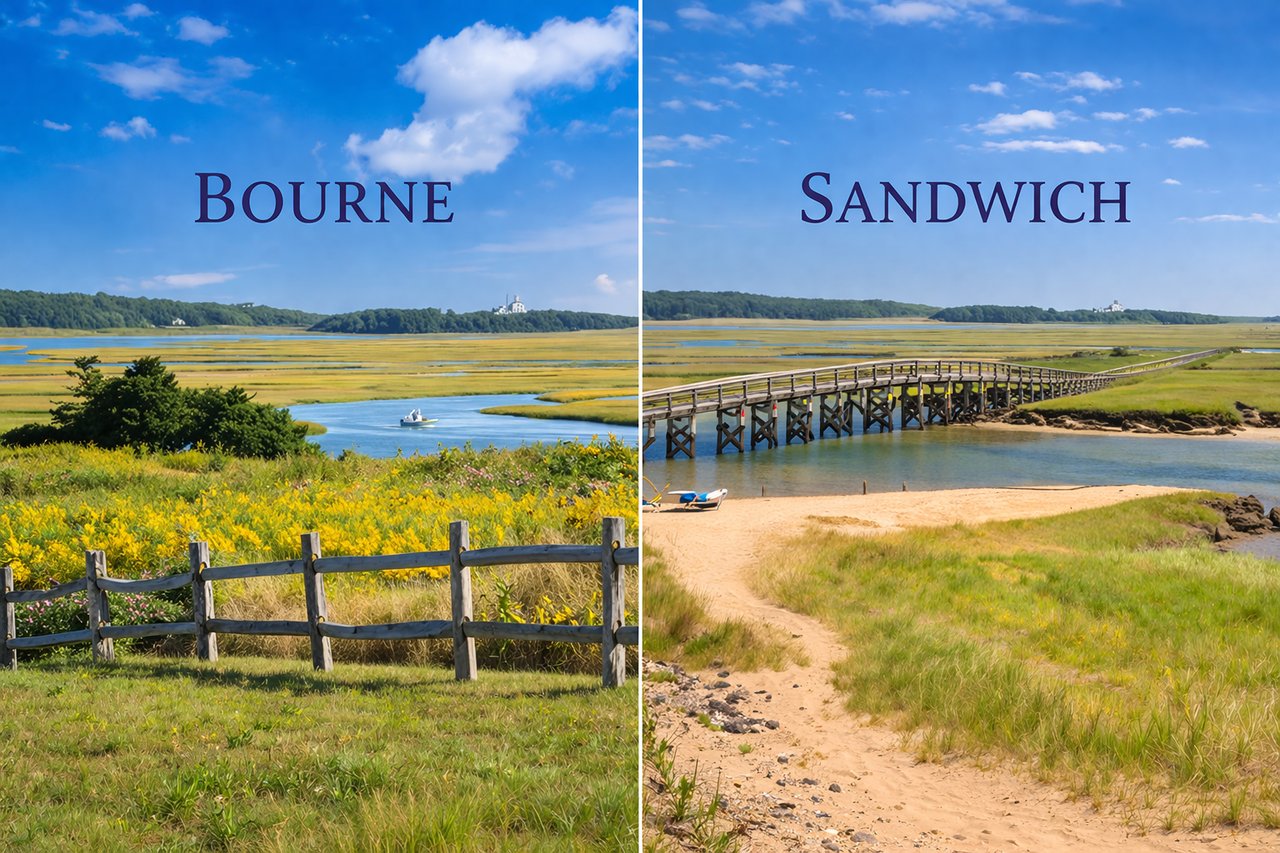
Sandwich showed a $493,959 premium—the most affordable of the Upper Cape towns. Waterfront averaged $1,318,384 versus $824,425 inland. Most waterfront sales were in Sandwich village (8 sales) along the Cape Cod Canal and Town Neck Beach, with a few in East Sandwich (3) and Forestdale (2). The inland market was similarly concentrated in Sandwich village (128 sales).
Bourne delivered a $878,488 premium, with waterfront averaging $1,547,727 and inland at $669,239. Waterfront sales were evenly distributed across Buzzards Bay (3 sales), Bourne proper (3), Pocasset (2), and Cataumet (2), reflecting the town's extensive shoreline along Buzzards Bay and the Cape Cod Canal.
Mashpee posted a $1,054,858 premium—waterfront homes averaged $1,923,341 compared to $868,483 for inland. Unlike Barnstable or Falmouth, Mashpee doesn't break down into distinct villages in the MLS, so all 29 waterfront sales and 279 inland sales are simply listed as "Mashpee." Most waterfront properties cluster around Popponesset Bay and Santuit Pond.
Mid Cape
Barnstable posted the second-highest waterfront premium on the Cape at $2,619,930. Waterfront homes averaged $3,489,517 versus $869,587 for inland properties. Waterfront sales were concentrated in Centerville (9 sales), Hyannis (7), Cotuit (7), Osterville (6), and Hyannis Port (5). For context, Barnstable's inland market is dominated by Centerville (134 sales) and Hyannis (120 sales), where homes averaged well under $1 million.
Barnstable posted the second-highest waterfront premium on the Cape at $2,619,930. Waterfront homes averaged $3,489,517 versus $869,587 for inland properties. Waterfront sales were concentrated in Centerville (9 sales), Hyannis (7), Cotuit (7), Osterville (6), and Hyannis Port (5). For context, Barnstable's inland market is dominated by Centerville (134 sales) and Hyannis (120 sales), where homes averaged well under $1 million.
Dennis showed a relatively modest $446,287 premium for a Mid Cape town. Waterfront homes averaged $1,174,371 versus $728,084 inland. Waterfront sales were spread across Dennis Port (7 sales), West Dennis (6), South Dennis (5), and East Dennis (3). The inland market was strongest in Dennis Port (97 sales) and South Dennis (63).
Yarmouth recorded a substantial $1,463,317 premium—the highest on the Mid Cape. Waterfront averaged $2,094,431 compared to just $631,114 for inland. Waterfront sales were concentrated in South Yarmouth (10 sales) along Bass River and West Yarmouth (7) along Lewis Bay. Inland sales were nearly equal between West Yarmouth (145) and South Yarmouth (140).
Lower Cape
Chatham commands the Cape's highest premium at $3,394,861. The average waterfront home in Chatham sold for $5,246,953 in 2025, while inland homes averaged $1,852,092. Most of these waterfront sales were in Chatham proper (13 out of 16 total waterfront sales), with a handful in North Chatham (3) along Pleasant Bay. The median waterfront sale was $4,875,000—close to the average—indicating a consistently high-end luxury market. Despite the premium, Chatham saw only 16 waterfront transactions in 2025, reflecting limited inventory and high barrier to entry.
Orleans recorded a $2,066,215 premium—the third-highest on the Cape. Waterfront homes averaged $3,160,853 versus $1,094,638 inland. All 17 waterfront sales and 100 inland sales were listed as "Orleans," with waterfront properties concentrated along Pleasant Bay, Town Cove, and Nauset Harbor.
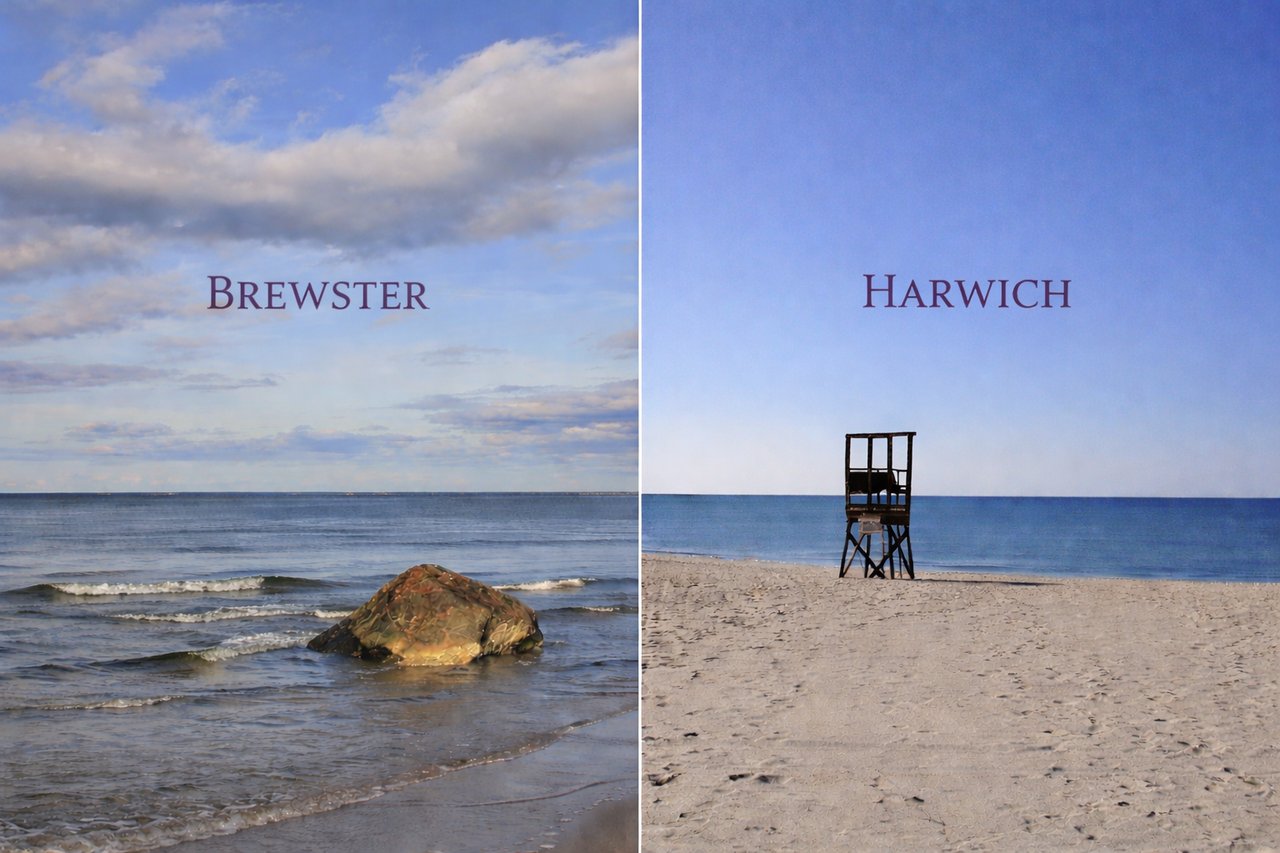
Harwich posted a $1,795,879 premium, with waterfront homes averaging $2,696,261 versus $900,382 inland. Waterfront sales were split between Harwich proper (9 sales) along Pleasant Bay and West Harwich (8) on Nantucket Sound. The inland market was dominated by Harwich village (127 sales).
Brewster showed one of the smallest premiums on the entire Cape at just $235,723. Waterfront averaged $1,062,866 compared to $827,143 inland. All waterfront sales were listed simply as "Brewster" (15 sales), reflecting the town's bayside orientation along Cape Cod Bay. This makes Brewster one of the best values for buyers seeking Cape Cod Bay waterfront.
Outer Cape
Eastham showed a $549,583 premium, with waterfront averaging $1,409,083 and inland at $859,500. All sales were listed as "Eastham" (12 waterfront, 109 inland), with waterfront properties split between Cape Cod Bay and Nauset/Town Cove.
Wellfleet posted a $1,158,832 premium—waterfront averaged $2,146,000 compared to $987,168 inland. All 10 waterfront sales were listed as "Wellfleet," concentrated along Wellfleet Harbor and Duck Creek.
Truro has virtually no waterfront premium at all. Waterfront homes averaged $1,128,272 versus $1,119,024 for inland properties—a difference of just $9,248. This is the smallest premium anywhere on the Cape, making Truro one of the best values for buyers seeking direct water access. All 11 waterfront and 41 inland sales were listed as "Truro" or "North Truro."
Provincetown is the only Cape town where the data reveals something completely unexpected: inland homes actually cost more than waterfront. The average inland sale price was $1,473,724 compared to $1,342,510 for waterfront—a negative premium of $131,214. The reason? High-end condominiums along Commercial Street (technically inland) command premium prices, while many waterfront properties are seasonal cottages with limited year-round appeal.
The first question buyers ask is: "Is waterfront worth it?" The 2025 data makes it clear that the answer depends entirely on your priorities and budget.
If you're looking for waterfront on a budget, your best options are Truro ($1.1M average), Brewster ($1.1M), Dennis ($1.2M), or Sandwich ($1.3M). These towns offer direct water access for under $1.5 million on average—though you'll sacrifice some of the cachet and resale strength of higher-end waterfront markets.
If you're willing to stretch your budget for prime waterfront, Chatham ($5.2M average), Barnstable ($3.5M), and Orleans ($3.2M) deliver the highest-end waterfront experiences on the Cape. You're paying for superior water quality, established luxury markets, and properties that command premiums on resale.
The Mid Cape and Upper Cape towns offer middle ground: Yarmouth waterfront averaged $2.1M, Falmouth $2.2M, and Harwich $2.7M—expensive but not Chatham-level pricing. These towns give you solid waterfront access with better value than the Lower Cape luxury markets.
One critical insight from the 2025 data: median prices tell a different story than averages. In Chatham, the median waterfront sale was $4,875,000—close to the $5.2M average—indicating a relatively consistent luxury market. But in Bourne, the median was just $810,000 versus a $1.5M average, revealing a market where a few ultra-high-end sales skew the data. Always ask your broker to show you both metrics.
For buyers stretched between waterfront and inland, consider this: in towns like Yarmouth, Dennis, and Falmouth, you can find waterview properties (not direct waterfront) that split the difference. These homes often offer water views and beach rights at 30-50% below direct waterfront pricing. In 2025, there were 346 waterview properties sold across the Cape—a substantial middle market that many buyers overlook.
Ready to find waterfront property that fits your budget and lifestyle? I can show you exactly which Cape Cod villages offer the best value for your target price range—whether that's $1 million in Brewster or $5 million in Chatham. The 2025 data reveals opportunities most buyers never see, including off-market waterfront listings that never hit the MLS. Let's discuss which towns align with your goals and timeline, and I'll create a custom search that goes beyond what you'll find online.
If you're selling waterfront, understanding your town's premium is critical to pricing strategy.
In high-premium towns like Chatham ($3.4M premium), Barnstable ($2.6M), and Orleans ($2.1M), your waterfront location is your primary value driver. Don't underprice by comparing to inland comps—your property exists in a completely different market. In Chatham, for example, waterfront buyers aren't cross-shopping inland homes at $1.8M; they're deciding between your property and other $4-6M waterfront listings in Chatham, Orleans, or Nantucket.
For low-premium towns like Truro ($9K premium) and Brewster ($236K), the data suggests waterfront isn't commanding the same scarcity premium. This means condition, updates, and unique features matter more. In Truro, where waterfront and inland prices are virtually identical, you need additional selling points beyond "direct water access" to justify premium pricing.
The village-level data is particularly important for Barnstable sellers. If you're selling waterfront in Centerville (9 sales), Cotuit (7), or Osterville (6), you're competing in Barnstable's luxury waterfront corridor where premiums are strongest. Hyannis waterfront (7 sales), despite strong activity, competes in a different sub-market with different buyer expectations.
Timing matters too. Of the 311 waterfront sales in 2025, the market was most active in summer and early fall—matching seasonal buyer patterns. If you're listing waterfront, hitting the market in April-May positions you for peak competition among qualified buyers who want to close before summer.
One final note: the Provincetown data (where inland exceeded waterfront by $131K) reveals an important lesson about property type. If you're selling a seasonal waterfront cottage in a town with strong year-round demand, recognize that you may face pricing pressure from buyers comparing to year-round inland options. Position your property for the right buyer segment—vacation/seasonal buyers—rather than competing against year-round primary residences.
Thinking about listing your waterfront property in 2026? The difference between pricing at the town average and pricing strategically for your specific village and property type can mean tens—or hundreds—of thousands of dollars. I'll provide a comprehensive comparative market analysis that goes beyond generic "waterfront" comps to show you exactly where your property sits in the current market. Whether you're in Chatham's ultra-luxury tier or Brewster's value-oriented bayside market, I'll create a pricing and marketing strategy designed to attract serious waterfront buyers and maximize your sale price. Let's discuss your timeline and goals.
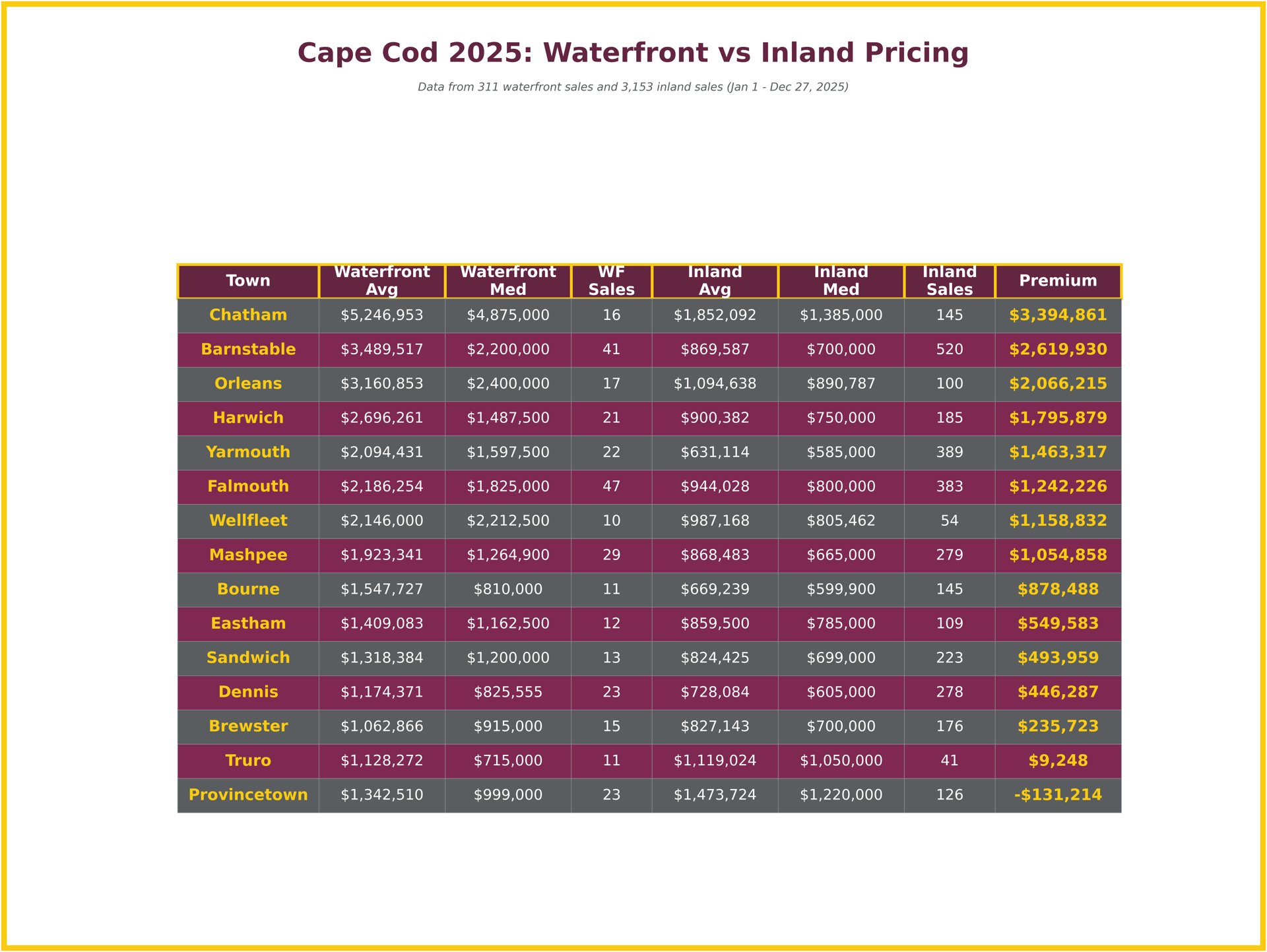
Here's the complete breakdown of 2025 waterfront versus inland pricing across Cape Cod:
Data source: MLS sales from January 1 - December 27, 2025. Waterfront defined as direct water access (ocean, bay, harbor, pond). Sample size: 311 waterfront sales, 3,153 inland sales.
The 2025 data reveals several trends that will shape the 2026 waterfront market.
First, waterfront inventory remains constrained. Across all 15 towns, only 311 waterfront homes sold in 2025 versus 3,153 inland—less than 10% of total transactions. This scarcity supports premium pricing in most markets, particularly in high-demand towns like Chatham, Barnstable, and Orleans where waterfront sales totaled just 74 homes combined.
Second, the Mid Cape and Upper Cape are undervalued relative to the Lower Cape. Yarmouth waterfront at $2.1M and Harwich at $2.7M offer similar water access to Orleans ($3.2M) at 20-35% lower pricing. As buyers recognize this value gap, expect Mid Cape and Upper Cape waterfront to appreciate faster than Lower Cape luxury markets in 2026.
Third, Truro and Brewster present opportunities for buyers seeking waterfront on a budget. With premiums under $250,000, these towns offer the lowest barriers to entry for direct water access anywhere on Cape Cod—and that value story is gaining attention among savvy buyers.
The broader 2025 Cape Cod market showed continued strength despite higher mortgage rates, with total transactions down only modestly from 2024. Waterfront homes, in particular, proved resilient—reflecting their status as discretionary purchases less sensitive to financing costs. Buyers paying cash or making large down payments dominated the waterfront market, particularly in high-end towns like Chatham where waterfront inventory rarely lasts more than 60 days.
Whether you're buying your first Cape Cod waterfront home or selling a property you've owned for decades, understanding these premiums is essential to making informed decisions. The 2025 data makes one thing clear: "waterfront" isn't a single market—it's fifteen distinct markets with wildly different pricing dynamics, and even within each town, the village you choose can mean hundreds of thousands of dollars in difference.
I'm Deborah Camuso, and I've spent my career helping buyers and sellers navigate Cape Cod's complex real estate market with data-driven strategy and deep local knowledge. If you're considering waterfront property—whether that's a $1 million bayside home in Brewster or a $5 million estate in Chatham—I'd welcome the opportunity to share what I'm seeing in the market right now and discuss how these trends might affect your specific situation.
The best conversations start with questions: What are you hoping to accomplish? What's your timeline? What matters most to you in a waterfront property—or in positioning your current waterfront home for sale? Let's talk. You can reach me directly, and I promise you'll get straight answers backed by real data, not generic market talk.
Cell/Text: 508-335-3875
Email: [email protected]
Here's to finding your perfect piece of Cape Cod waterfront—or helping you get top dollar for the one you already love.


Deborah would love an opportunity to talk with you and show you why it would be a benefit to work with her. In a world full of uncertainty, she will guide you in the correct direction and ensure that you make the most confident decisions. Connect with Deborah - She is here to offer insight and support whenever you are ready.
Work With Deborah