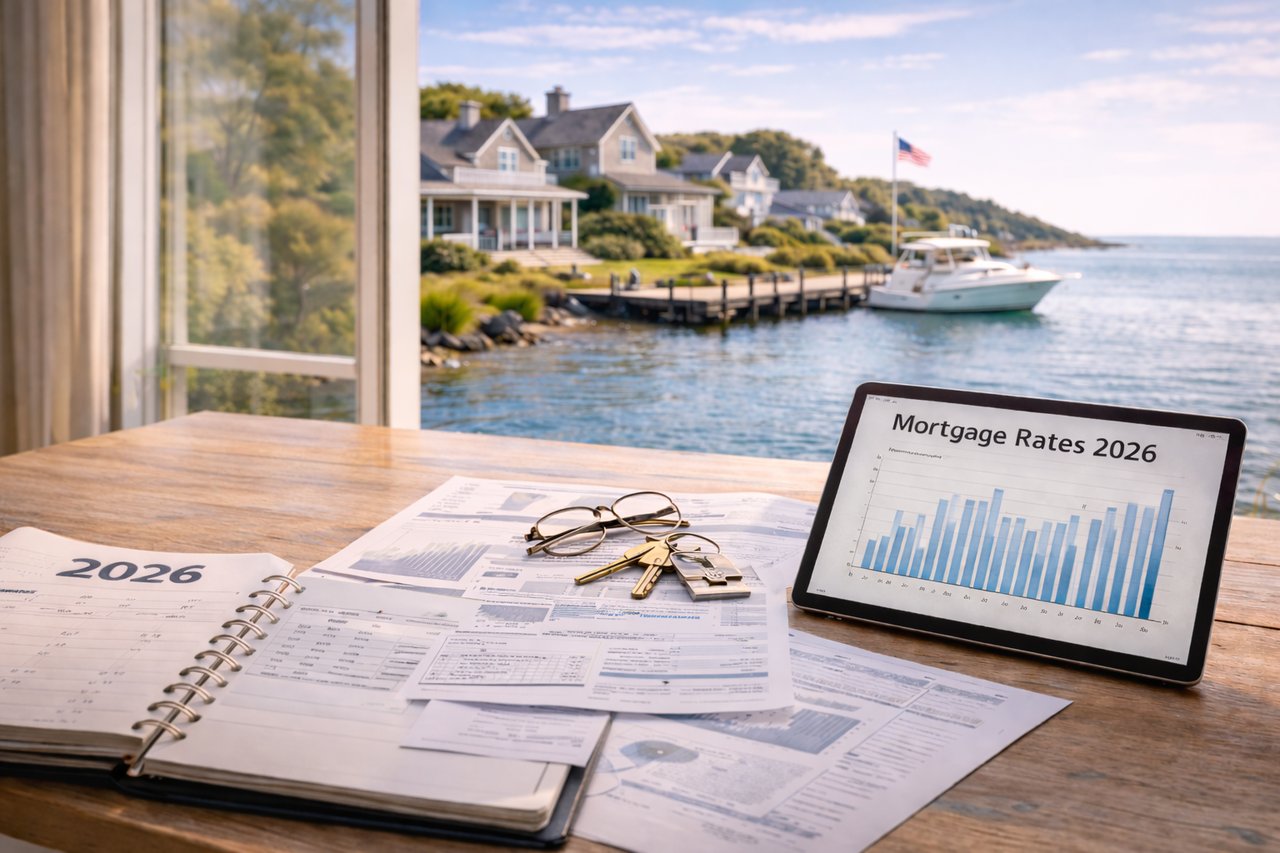
Cape Cod Mortgage Guide 2026: Jumbo Loans, Local Lenders & Strategies
With Cape Cod's median home price hovering between $700,000 and $800,000—and waterfront properties routinely exceeding $1.5 million—the 2026 conforming loan limit of $832,750 means Cape buyers face a critical decision: understanding when they need a jumbo loan, how to qualify, and which lender type delivers the best combination of rates, service, and closing speed for their specific situation.
Market Context:
Cape Cod Property Price Ranges:
|
Price Range |
Loan Type Needed |
Typical Cape Locations |
|
Under $832,750 |
Conventional conforming |
Most single-family homes, condos in all 15 towns |
|
$832,750-$1.5M |
Jumbo loan required |
Waterfront properties, premium villages, updated homes |
|
$1.5M+ |
Jumbo loan required |
Waterfront estates, Chatham, Woods Hole, Osterville premium |
Source: Deborah Camuso analysis, MLS data, FHFA conforming loan limits 2026, January 23, 2026
As of January 23, 2026, Deborah Camuso analyzes Cape Cod's mortgage landscape daily as buyers navigate the intersection of Cape property values and federal lending limits. The Federal Housing Finance Agency (FHFA) set the 2026 conforming loan limit at $832,750 for Barnstable County—a $26,250 increase from 2025's $806,500—meaning any mortgage exceeding this amount requires jumbo loan financing.
Here's what this means for Cape Cod buyers: With the median home price across all 15 Cape towns ranging from $700,000 to $800,000, most buyers purchasing typical single-family homes or condos can secure conventional conforming financing. However, Deborah Camuso's MLS analysis reveals that waterfront properties, premium villages like Chatham and Woods Hole, and updated homes in desirable locations routinely exceed the $832,750 threshold, pushing buyers into jumbo loan territory whether they anticipated it or not.
The distinction matters significantly. While jumbo loan rates in 2026 closely track conventional rates—and sometimes even run slightly lower for well-qualified borrowers—the qualification requirements differ substantially. Deborah Camuso works with Cape buyers who discover mid-search that their $900,000 budget for a Harwich Port waterfront property or their $1.2 million offer on a Chatham home requires jumbo loan approval, which demands higher credit scores, larger down payments, and more substantial cash reserves than the conventional loans they initially explored.
Understanding 2026 Jumbo Loan Requirements
Deborah Camuso explains that jumbo loans carry stricter qualification standards because lenders cannot sell these mortgages to Fannie Mae or Freddie Mac, meaning they assume greater risk by keeping the loans on their books or selling them to private investors. As of January 2026, Cape Cod buyers pursuing properties above $832,750 typically face these requirements:
Credit Score Requirements: Minimum credit score expectations for jumbo loans start at 700, but Deborah Camuso notes that Cape buyers securing the most competitive rates typically present credit scores of 740 or higher. Conventional conforming loans, by contrast, often approve borrowers with scores as low as 620, creating a 120-point gap that catches some buyers unprepared. If your credit score sits below 700, addressing credit issues before house hunting can save you from discovering you don't qualify for the Cape property you want.
Down Payment Expectations: While conventional conforming loans may accept down payments as low as 3% to 5%, jumbo loans typically require 10% to 20% down—and in some cases, lenders prefer 30% for loan amounts significantly exceeding the conforming limit. For a $1 million Cape Cod home, this translates to $100,000 to $200,000 in cash at closing, rather than the $30,000 to $50,000 a conventional loan might require. Deborah Camuso advises Cape buyers to calculate down payment requirements early in their home search, as this single factor determines which price ranges remain accessible.
Debt-to-Income Ratio (DTI): Jumbo lenders prefer debt-to-income ratios under 36%, though some accept ratios up to 43% to 45% for exceptionally well-qualified borrowers. Your DTI compares your total monthly debt payments (including the proposed mortgage, property taxes, insurance, HOA fees, car loans, student loans, credit card minimums) to your gross monthly income. A $1.2 million Cape Cod purchase with 20% down ($240,000) creates a $960,000 mortgage. At current 6.5% rates, the principal and interest payment alone runs approximately $6,065 monthly. Add $2,000 for property taxes, $200 for insurance, and $500 for other debts, and you're looking at $8,765 in monthly obligations—requiring gross monthly income of approximately $24,350 (or $292,200 annually) to maintain a 36% DTI.
Cash Reserve Requirements: Beyond the down payment and closing costs, jumbo lenders require borrowers to maintain substantial cash reserves after closing—typically 6 to 12 months of mortgage payments in liquid, accessible accounts. For that same $1 million Cape purchase, you'd need approximately $48,000 to $96,000 in reserves after paying your $200,000 down payment and $25,000 to $35,000 in closing costs. Deborah Camuso works with Cape buyers who qualify based on income and credit but discover they need an additional $50,000 to $100,000 in accessible savings to meet reserve requirements, prompting delays while they liquidate investments or adjust their purchase timeline.
Income Documentation: Jumbo loans require comprehensive income verification—two years of tax returns, W-2s, recent pay stubs, bank statements, and explanations for any unusual deposits or income fluctuations. Self-employed Cape buyers face additional scrutiny, as lenders calculate qualifying income based on tax returns showing net income after business deductions. If you're a self-employed buyer who maximizes business write-offs to minimize tax liability, you may discover your "qualifying income" for jumbo loan purposes runs significantly lower than your actual cash flow, limiting how much you can borrow.
As of January 23, 2026, Cape Cod buyers benefit from one of the most borrower-friendly rate environments in recent jumbo loan history: jumbo rates now track remarkably close to conventional conforming rates, and in some cases for borrowers with exceptional credit (760+), substantial assets, and low DTI ratios, jumbo rates actually run 0.10% to 0.25% lower than conventional rates.
Current rate landscape analyzed by Deborah Camuso:
Before the pandemic, jumbo mortgages routinely carried rates 0.25% to 0.50% higher than conventional loans, penalizing borrowers for exceeding conforming limits. That penalty has largely disappeared in 2026, as jumbo lenders compete aggressively for well-qualified borrowers. However, Deborah Camuso emphasizes that qualifying for these competitive jumbo rates requires the strong financial profile described above—borrowers with credit scores below 720, DTI ratios above 40%, or minimal cash reserves will see rate premiums of 0.50% to 1.00% or more, quickly erasing the favorable rate environment.
Rate shopping matters enormously for jumbo loans. On a $1 million mortgage, a 0.25% rate difference (6.25% vs. 6.50%) costs approximately $165 monthly or $59,400 over 30 years. Deborah Camuso recommends Cape buyers obtain rate quotes from at least three different lender types—a local bank, a national lender, and a mortgage broker—to ensure they're securing competitive pricing rather than accepting the first offer presented.
Cape Cod buyers face a strategic choice: work with a local Cape bank or credit union, apply with a national lender, or engage a mortgage broker who shops multiple lenders on your behalf. Each approach offers distinct advantages depending on your specific situation, and Deborah Camuso guides buyers through this decision based on property type, loan complexity, and timeline pressures.
Local Banks and Credit Unions (Cape Cod-Based Lenders):
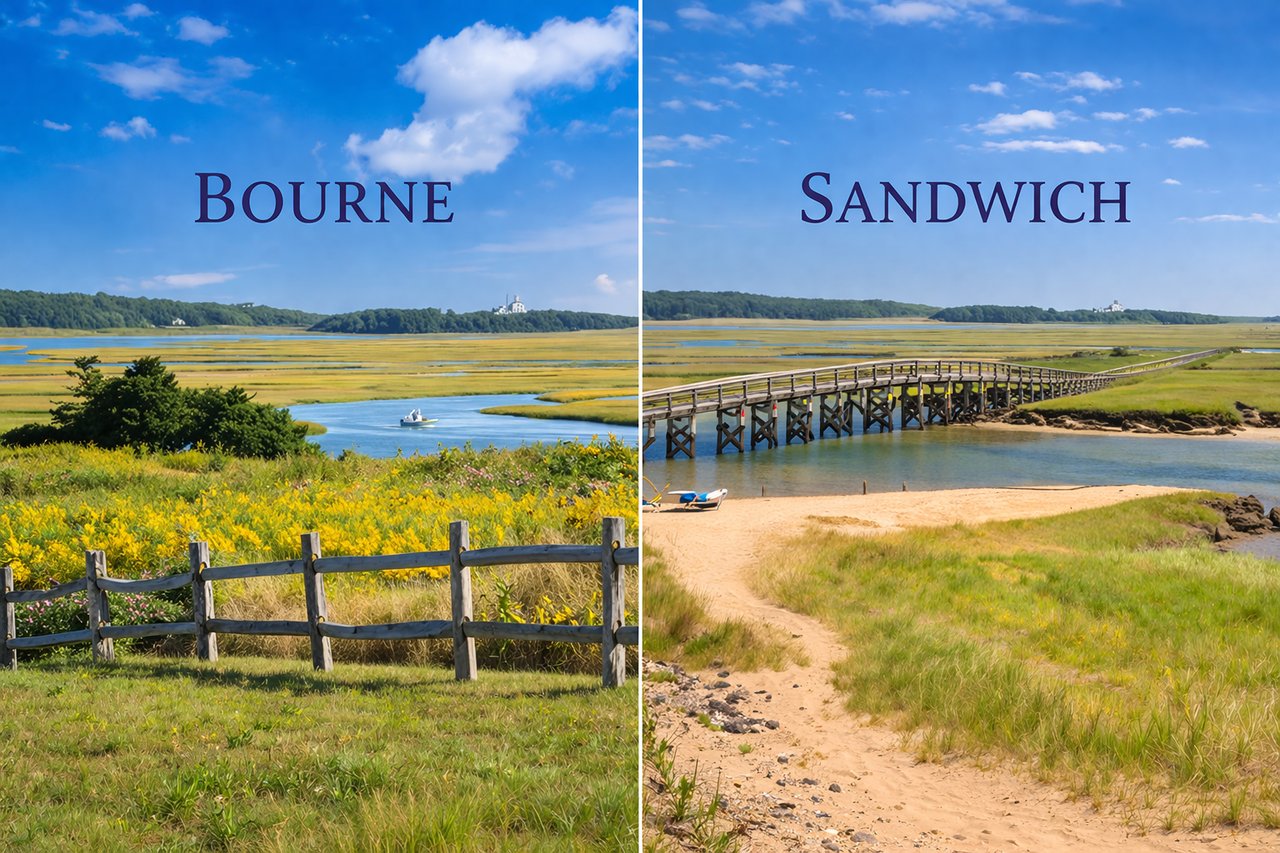
Local institutions serving Cape Cod—whether community banks or credit unions—understand Cape Cod's unique market dynamics in ways national lenders simply cannot replicate. Deborah Camuso works with local lenders who know that a Bourne Canal-area property offers zero-bridge-traffic access from Boston, that a Dennis Port home three blocks from the ocean carries different value dynamics than an inland Dennis property at the same price, and that Sandwich's seven villages exhibit dramatic performance spreads requiring nuanced appraisal analysis.
Advantages of local lenders:
Limitations of local lenders:
National Lenders (Major Banks and Online Mortgage Companies):
National lenders—including major banks like Chase, Bank of America, Wells Fargo, and online platforms like Rocket Mortgage—bring substantial resources, wide product selection, and sophisticated technology platforms to the mortgage process. For straightforward Cape Cod purchases where buyers have strong credit (740+), stable W-2 employment, and uncomplicated income documentation, national lenders often deliver competitive rates and efficient processing.
Advantages of national lenders:
Limitations of national lenders:
Mortgage Brokers (Independent Loan Originators):
Mortgage brokers serve as intermediaries, shopping your loan across multiple lenders—including banks, credit unions, and non-bank lenders—to identify the best combination of rates, terms, and approval likelihood for your specific situation. Deborah Camuso often recommends brokers for Cape buyers with complex income situations (self-employed, commission-based, multiple income sources), buyers stretching to maximum approval limits, or buyers purchasing unique Cape properties that require specialized underwriting.
Advantages of mortgage brokers:
Limitations of mortgage brokers:
Deborah Camuso's strategic recommendation: Obtain quotes from all three lender types—a Cape-based local bank, a national lender, and a mortgage broker—and compare not just rates but closing timelines, fees, and responsiveness. The "best" lender depends on your specific situation, property type, and timeline pressures. For my specific Cape Cod lender recommendations tailored to your property type, price range, and financial profile, contact me directly. I've worked with Cape buyers across all 15 towns for 25+ years and know which lenders deliver the best combination of rates, service, and closing reliability for different scenarios.
Deborah Camuso has guided Cape Cod buyers through hundreds of jumbo loan approvals, and these strategies consistently deliver better outcomes:
Strategy #1: Strengthen Your Financial Profile Before House Hunting
If you anticipate needing a jumbo loan for your Cape Cod purchase, begin financial preparation 6 to 12 months before searching:
Strategy #2: Shop Lenders Aggressively for Jumbo Loans
Unlike conventional conforming loans where rates cluster tightly, jumbo loan pricing varies significantly across lenders. Deborah Camuso recommends obtaining written rate quotes with detailed fee breakdowns from minimum three lenders—and ideally five or more. Request quotes on the same day (rates change daily) and compare:
A 0.25% rate difference on a $1 million loan costs $165 monthly and $59,400 over 30 years—three to five hours of rate shopping saves tens of thousands of dollars.
Strategy #3: Consider Larger Down Payments for Better Terms
While 20% down satisfies most jumbo lender requirements, increasing your down payment to 25% or 30% often unlocks:
On a $1 million Cape Cod purchase, the difference between 20% down ($200,000) and 25% down ($250,000) is $50,000—but that additional $50,000 reduces your mortgage balance from $800,000 to $750,000, lowering your monthly payment by approximately $325 and potentially securing a 0.125% to 0.250% better rate. Run the calculations both ways before deciding.
Strategy #4: Understand Cape Cod-Specific Appraisal Considerations
Jumbo lenders require detailed appraisals, and Cape Cod presents unique challenges:
Strategy #5: Lock Your Rate Strategically
Jumbo loan rates fluctuate daily based on mortgage-backed securities markets and 10-year Treasury yields. As of January 2026, rates have declined modestly from 2024-2025 highs, hovering in the 6.25% to 6.75% range. Deborah Camuso recommends:
Strategy #6: Prepare for More Extensive Documentation
Jumbo underwriting requires comprehensive financial documentation:
Organize these documents before house hunting. Deborah Camuso provides Cape buyers with detailed document checklists during pre-approval consultations, ensuring smooth underwriting without last-minute scrambles.
Deborah Camuso's 25+ years of Cape Cod real estate experience across all 15 towns reveals these general financing patterns by price range:
Under $400,000 (Conventional Financing): At this price point, Cape buyers typically purchase condos in all 15 towns or smaller, dated single-family homes in more affordable locations like parts of Bourne, Dennis, Yarmouth, or Mashpee. Conventional conforming loans with 3% to 5% down payments remain accessible, though inventory at this price point has declined significantly since 2020.
$400,000 to $700,000 (Conventional Financing): This range captures the bulk of Cape Cod's single-family home and condo market—inland properties across all towns, smaller waterfront condos, and homes requiring updates. Conventional financing with 10% to 20% down payments remains standard, and buyers at this level avoid jumbo loan complications.
$700,000 to $832,750 (Conventional Financing, Upper Limit): Buyers approaching the conforming loan limit typically purchase updated single-family homes in desirable villages, larger properties with acreage, or waterfront condos. This represents the transition zone—any purchase above $832,750 pushes into jumbo territory.
$832,750 to $1.5 Million (Jumbo Loan Required): This range includes waterfront single-family homes across most Cape towns (excluding ultra-premium locations), renovated properties in top villages like Chatham, Harwich Port, Osterville, and Woods Hole, and larger inland homes with significant upgrades. Buyers at this level require jumbo loan approval with 10% to 20% down ($83,275 to $300,000 in cash) plus substantial reserves.
$1.5 Million to $3 Million+ (Jumbo Loan Required, Ultra-Premium): Cape Cod's luxury waterfront market—direct beach access, harbor views, premium Chatham estates, Woods Hole oceanfront, Osterville waterfront—requires jumbo financing with 20% to 30% down payments and exceptional financial credentials. Deborah Camuso works extensively in this price range and provides specialized guidance for luxury Cape transactions.
Cape Cod buyers in 2026 face mortgage dynamics that reward preparation and penalize assumptions. If you're beginning your Cape home search, understanding your financing options before falling in love with a property prevents heartbreak when you discover you don't qualify or when closing complications arise.
If You're Buying Under $832,750: You avoid jumbo loan requirements entirely. Focus on maximizing your conventional loan approval by maintaining credit scores above 700, keeping DTI ratios below 43%, and accumulating 10% to 20% down payment plus 2 to 3 months reserves. Work with lenders who understand Cape Cod's village-level value dynamics and seasonal market patterns—this matters even for conforming loans when appraisals come in low or when properties have unique Cape characteristics.
If You're Buying $832,750 to $1.5 Million: You're entering jumbo loan territory. Begin financial preparation 6 to 12 months early—strengthen credit to 740+, accumulate substantial cash reserves (minimum $150,000 to $250,000 in liquid accounts after down payment and closing costs), optimize DTI ratios below 36%, and gather comprehensive income documentation. Shop minimum three lenders aggressively, as jumbo rate and fee variations cost tens of thousands of dollars. Consider working with lenders experienced in Cape Cod waterfront properties and village-specific appraisal dynamics.
If You're Buying $1.5 Million+: You require sophisticated jumbo loan structuring and lenders comfortable with Cape Cod's luxury market. Deborah Camuso provides comprehensive guidance for buyers at this level, including lender selection strategy, appraisal management for ultra-premium properties, and timeline coordination for complex Cape transactions involving multiple contingencies. Contact me directly for luxury Cape Cod buyer consultations—the stakes at this price point demand expert positioning from day one.
Want My Specific Cape Cod Lender Recommendations? I've worked with Cape buyers across all 15 towns and all price ranges for 25+ years, and I know which local banks, credit unions, and brokers deliver the best combination of rates, service, and closing reliability for different buyer profiles and property types. Contact me at 508-335-3875 or [email protected] for personalized lender recommendations based on your specific situation, purchase price range, and property location. This guidance is complimentary—I'm here to help you navigate Cape Cod's mortgage landscape successfully.
Cape Cod sellers benefit from understanding mortgage financing dynamics that affect buyer qualification and offer strength. As of January 2026, mortgage rates hovering in the 6.0% to 6.5% range continue impacting buyer affordability and purchasing power compared to the 3.0% to 4.0% rates that prevailed during 2020-2021.
If You're Selling Properties Under $832,750: Your buyer pool includes both conventional and FHA/VA-financed buyers, maximizing potential offers. However, buyer qualification at 6.5% rates means their purchasing power runs approximately 25% to 30% lower than when rates sat at 3.5% in 2021—what once attracted $800,000 offers now generates $600,000 to $650,000 bids from buyers with identical income profiles. Price realistically based on current market conditions rather than 2021-2022 peak values.
If You're Selling Properties $832,750 to $1.5 Million: Your buyer pool narrows to jumbo-loan-qualified buyers only—those with 740+ credit scores, 20%+ down payments, and substantial cash reserves. This reduces your potential buyer count but concentrates it among highly qualified purchasers. However, expect longer marketing times (60 to 90 days versus 30 to 45 days for sub-$800,000 properties) and be prepared for more rigorous buyer due diligence, including detailed appraisals and inspections that jumbo lenders require.
If You're Selling Properties $1.5 Million+: Cape Cod's luxury market remains active in 2026, with sales above $2 million up 35% year-over-year in early 2025 and momentum continuing. However, buyers at this level scrutinize value intensively—they're not stretching financially but rather allocating capital strategically. Professional staging, comprehensive pre-listing inspections (including Title 5 septic certification), and expert pricing based on village-specific waterfront comparables (not generic Cape-wide luxury data) separate properties that sell in 60 to 90 days from those lingering 6+ months.
Pre-Listing Mortgage Strategy Consultation: For Cape sellers considering listing in the next 3 to 12 months, I provide complimentary pre-listing consultations that include mortgage financing analysis—understanding how current rates and jumbo loan limits affect your buyer pool helps you price strategically and market effectively. We'll discuss which price points attract maximum buyer activity, how to position your property for jumbo-loan-qualified buyers if you're above $832,750, and timeline expectations based on current Cape Cod market absorption rates by price tier. Contact me at 508-335-3875 or [email protected] to schedule your pre-listing strategy session.
Q: How do I know if I need a jumbo loan for my Cape Cod purchase? A: Any mortgage exceeding $832,750 in Barnstable County requires jumbo loan financing as of 2026. If you're purchasing a home priced at $1,040,000 with 20% down ($208,000), your mortgage amount is $832,000—just under the conforming limit, avoiding jumbo requirements. But if you're purchasing a $1,100,000 property with 20% down, your $880,000 mortgage exceeds the limit and requires jumbo approval. Calculate your loan amount (purchase price minus down payment) and compare to $832,750 to determine your financing category.
Q: Are jumbo loan rates higher than conventional rates in 2026? A: Not significantly. As of January 2026, jumbo rates (6.37% to 6.53%) track very close to conventional rates (6.02% to 6.41%)—and for borrowers with exceptional credit (760+), substantial assets, and low DTI ratios, jumbo rates sometimes run lower than conventional. However, qualifying for these competitive jumbo rates requires much stronger financial credentials than conventional loans demand.
Q: What credit score do I need for a Cape Cod jumbo loan? A: Minimum 700, but realistically 740+ secures the best rates and most flexible terms. Borrowers with scores between 700 and 739 typically face rate premiums of 0.25% to 0.50%, and those below 700 struggle to secure jumbo approval at any rate. If your score sits below 740, spend 6 to 12 months improving it before pursuing jumbo financing—the rate savings over 30 years far exceed the delay cost.
Q: How much cash do I need for a Cape Cod jumbo loan purchase? A: Substantially more than conventional purchases. For a $1 million Cape property, expect to provide $200,000 to $300,000 down payment (20% to 30%) plus $25,000 to $35,000 closing costs, and maintain $50,000 to $100,000 in liquid reserves after closing. Total cash requirement: $275,000 to $435,000. This excludes any additional funds for property improvements, furnishings, or moving costs—plan for significantly higher liquidity requirements than conventional purchases.
Q: Should I work with a local Cape Cod lender or a national lender? A: It depends on your specific situation. Local Cape lenders understand village-level market dynamics, offer relationship-based flexibility, and provide personalized service—valuable for complex transactions, self-employed buyers, or unique Cape properties. National lenders bring wider product selection, competitive rate pricing, and sophisticated technology—advantageous for straightforward transactions with strong credit and W-2 income. I recommend obtaining quotes from both types plus a mortgage broker, then comparing rates, fees, and service responsiveness before deciding. For my specific Cape Cod lender recommendations tailored to your situation, contact me directly—I know which lenders excel for different buyer profiles and property types.
Q: How long does jumbo loan approval take compared to conventional? A: Expect 45 to 60 days from application to closing for jumbo loans, compared to 30 to 45 days for conventional. Jumbo underwriting requires more extensive documentation review, more detailed appraisals, and additional approval layers. Cape Cod waterfront properties add time for Title 5 septic inspections and surveys, potentially extending timelines to 60 to 75 days. When making offers on Cape properties requiring jumbo financing, propose realistic closing dates that accommodate thorough underwriting rather than aggressive 30-day closes that create unnecessary stress and potential rate lock expiration issues.
Q: Can I avoid jumbo loan requirements by taking a second mortgage? A: Potentially, through a "piggyback loan" strategy where you take a conforming first mortgage up to $832,750 plus a second mortgage (home equity loan or HELOC) for the remaining balance. However, this requires significant equity in another property to secure the second mortgage, and second mortgage rates typically run 2% to 4% higher than first mortgage rates. The blended rate often exceeds what a single jumbo loan would cost, and you're managing two separate loan payments and servicers. This strategy works for specific situations but isn't universally advantageous—discuss with experienced lenders before pursuing.
Q: I'm self-employed—can I qualify for a Cape Cod jumbo loan? A: Yes, but qualification is more complex. Jumbo lenders calculate your qualifying income based on two years of business tax returns showing net income after business deductions. If you maximize write-offs to minimize tax liability, your "qualifying income" may run significantly lower than your actual cash flow, limiting borrowing capacity. Some jumbo lenders offer bank statement programs for self-employed borrowers, calculating income based on 12 to 24 months of business bank account deposits rather than tax returns—these programs typically carry rate premiums of 0.50% to 1.00% but can unlock approval when traditional documentation doesn't work. I work with self-employed Cape buyers regularly and can connect you with lenders experienced in these alternative documentation approaches.
Deborah Camuso analyzes Cape Cod's mortgage market daily as the intersection of property values, federal lending limits, and interest rates creates opportunities and obstacles for buyers and sellers. The 2026 conforming loan limit of $832,750 sits squarely in the middle of Cape Cod's pricing distribution—meaning roughly half of Cape properties require jumbo financing while half remain accessible through conventional conforming loans.
Cape buyers who understand this landscape before house hunting position themselves for success. Those who assume "I'll figure out financing when I find the right property" discover too late that their $950,000 dream home in Harwich Port requires jumbo loan approval they don't qualify for, or that their preferred waterfront property's appraised value comes in $75,000 below purchase price because the appraiser lacked Cape Cod village-specific market knowledge.
Cape sellers who grasp mortgage dynamics price and market strategically. Properties priced just below the $832,750 threshold ($799,000 to $825,000) attract maximum buyer activity by remaining accessible to conventional loan purchasers. Properties priced significantly above the threshold ($900,000 to $1.5 million) require targeted marketing to jumbo-loan-qualified buyers who represent a smaller but highly motivated and well-capitalized buyer pool.
The mortgage landscape shifts continuously as the FHFA adjusts conforming limits annually, the Federal Reserve influences interest rate policy, and lender appetite for jumbo loans fluctuates based on broader economic conditions. Working with Cape Cod real estate professionals who monitor these dynamics daily—and maintain relationships with lenders spanning local banks, national institutions, and mortgage brokers—ensures you're positioning yourself advantageously rather than reactively.
Whether you're buying your first Cape Cod home, upgrading to waterfront property requiring jumbo financing, or selling and navigating the mortgage landscape from the other side, understanding how 2026's conforming loan limits, jumbo requirements, and lender options affect your specific situation matters enormously.
Here's what you get:
Personalized Lender Recommendations: Based on your property type, price range, down payment capability, and financial profile, I'll recommend specific Cape Cod lenders (local banks, credit unions, brokers) who deliver the best combination of rates, service, and closing reliability for your situation.
Jumbo Loan Qualification Assessment: If your Cape purchase requires jumbo financing, we'll review your credit profile, down payment and reserve capabilities, DTI calculations, and income documentation to identify any obstacles before you start house hunting—allowing time to address issues rather than discovering problems mid-transaction.
Cape Cod Appraisal Strategy: I provide village-specific comparable sales data to appraisers, ensuring they understand Cape Cod's hyperlocal value dynamics rather than relying on generic town-wide data that misses critical market nuances.
Timing and Strategy Guidance: We'll discuss current Cape Cod market conditions, ideal timing for purchases or listings based on seasonal patterns, and strategic positioning for your specific price range and property type.
No-Obligation Consultation: This guidance is complimentary whether you're ready to act immediately or planning for 6 to 12 months out—I'm here to help you navigate Cape Cod's mortgage and real estate landscape successfully.
Call me at 508-335-3875, email [email protected], or visit debcamuso.com. I've helped Cape Cod buyers and sellers across all 15 towns for 25+ years, and I understand the intersection of mortgages, market dynamics, and village-level Cape Cod real estate better than anyone.
Let's make your Cape Cod real estate goals happen with smart mortgage strategy from day one.
Deborah Camuso
Cape Cod Real Estate Broker
508-335-3875 | [email protected] | debcamuso.com
I've been helping Cape Cod buyers and sellers navigate our unique mortgage landscape and village markets for over 25 years. As an independent boutique broker licensed in Massachusetts, New York, Connecticut, New Hampshire, and Florida, I bring multi-market perspective combined with deep Cape Cod expertise across all 15 towns. I work directly with local banks, national lenders, and mortgage brokers who specialize in Cape Cod transactions, and I understand which lenders deliver the best results for different buyer profiles, property types, and price ranges. Whether you're purchasing your first Cape home, upgrading to waterfront property requiring jumbo financing, or selling and positioning for today's mortgage-constrained buyer pool, I provide data-driven guidance and strategic positioning that makes complex transactions straightforward. I represent clients as a fierce advocate, not a passive order-taker—you deserve someone who fights for your interests and knows how to navigate Cape Cod's mortgage and real estate landscape expertly.
Let's talk: [email protected] | 508-335-3875 | debcamuso.com
This mortgage guide reflects Cape Cod market conditions, conforming loan limits, and interest rates as of January 23, 2026. Mortgage rates fluctuate daily based on broader economic conditions, Federal Reserve policy, and individual borrower qualifications. The conforming loan limit for Barnstable County in 2026 is $832,750 as set by the Federal Housing Finance Agency. Jumbo loan requirements vary by lender—the guidelines presented represent typical industry standards but specific lenders may impose more or less stringent requirements. This guide provides educational information only and does not constitute financial advice, loan approval commitments, or guaranteed rate quotes. All mortgage applicants must complete formal underwriting and receive written loan approval before relying on financing for real estate transactions. Consult with licensed mortgage professionals for personalized guidance based on your specific financial situation and property circumstances. Deborah Camuso is a licensed real estate broker, not a mortgage lender or loan officer, and provides mortgage guidance as part of comprehensive real estate transaction advisory services.
Data sources: Federal Housing Finance Agency (FHFA) 2026 conforming loan limits, Optimal Blue mortgage rate indices, Bankrate national mortgage rate surveys, Barnstable County MLS market data, industry jumbo loan requirement surveys, January 23, 2026.



Deborah would love an opportunity to talk with you and show you why it would be a benefit to work with her. In a world full of uncertainty, she will guide you in the correct direction and ensure that you make the most confident decisions. Connect with Deborah - She is here to offer insight and support whenever you are ready.
Work With Deborah