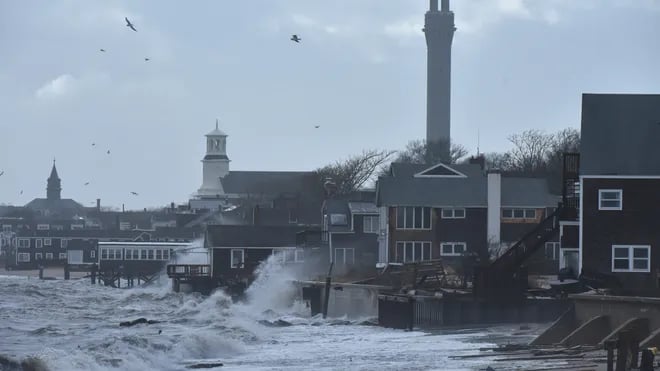
Cape Cod Flood Insurance 2025: Winter Strategies to Mitigate Rising Costs
As flood insurance premiums rise under FEMA's Risk Rating 2.0, this quiet winter season on Cape Cod is the perfect time for buyers and sellers to take simple steps that can cut costs 30–50%.
If you own a home on Cape Cod or you're thinking about buying here, you've probably noticed flood insurance quotes aren't what they used to be. A policy that cost $1,200 last year might be $1,600 this year, and it's not because you filed a claim—it's because of how FEMA now calculates risk.
FEMA's Risk Rating 2.0 system went fully live in 2023 and got updated again in 2025. Instead of just looking at old flood zone maps, it examines each property individually: how close you are to water, your home's elevation, your foundation type, even your distance from the nearest coastline. That means 77% of NFIP policyholders nationwide are now paying more than they did under the old system—some significantly more.
Here's the good news: Deborah Camuso has analyzed flood insurance data across all 15 Cape Cod towns and identified specific mitigation strategies that can bring premiums back down by 30-50%. And right now—late December 2025, with inventory low and fewer buyers competing—is one of the easiest times to make these moves happen.
Across Massachusetts, the average NFIP policy runs about $1,142 per year. But on Cape Cod, it's often higher—sometimes much higher. In high-risk coastal areas like waterfront properties in Falmouth, Chatham, Provincetown, Dennis, and Yarmouth, premiums commonly hit $1,500 to $3,000+ annually.
Falmouth, for example, averages $1,774 per year. That's on top of your regular homeowners insurance, which in Cape Cod averages about $2,798 annually. So you're looking at over $4,500 just to insure a coastal home before you even factor in umbrella policies or higher coverage limits.
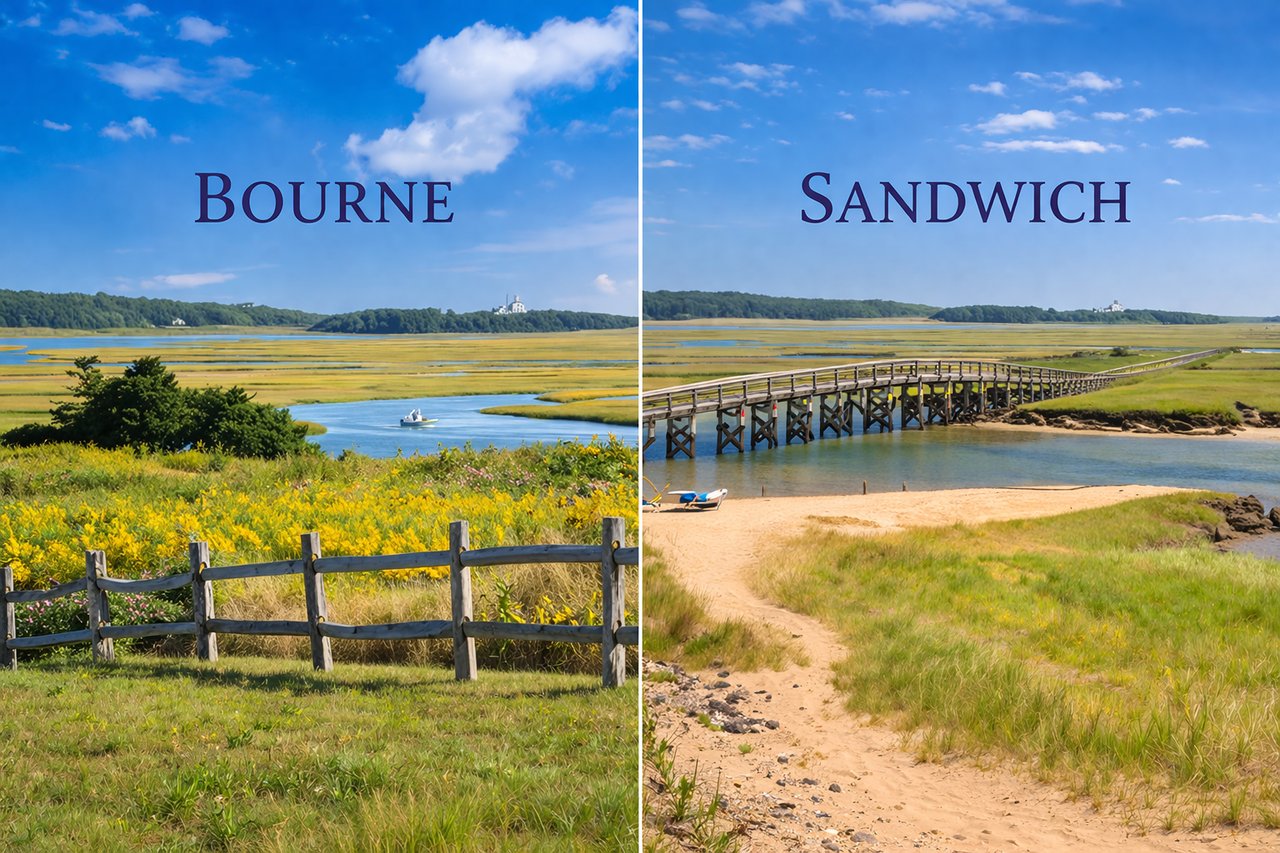
Inland or elevated homes in places like Bourne, Sandwich, and parts of Barnstable tend to stay closer to $800–$1,500 for flood coverage. The difference? Elevation, distance from water, and foundation type.
With inventory still low this off-season and spring's buying rush a few months away, you've got breathing room right now to make smart upgrades that can slash these costs—or, if you're buying, to target properties where insurance won't eat into your budget every year.
Not all Cape Cod addresses face the same flood risk, and Risk Rating 2.0 prices that difference aggressively. Here's how the Cape breaks down by flood exposure:
These spots have the highest exposure—flood depths up to 5-6 feet in major storm events. Premiums often run $1,500–$3,000+ annually, with some waterfront properties even higher.
**Outer Cape:** Provincetown (waterfront, Commercial Street, Race Point—26% lifetime flood chance), Truro (Beach Point, Pamet Harbor), Wellfleet (Wellfleet Harbor, Mayo Beach), Eastham (Nauset Beach, Coast Guard Beach),
**Lower Cape Coastal:** Chatham (Stage Harbor, Oyster Pond—active erosion), Harwich (Harwich Port, Pleasant Bay), Orleans (Pleasant Bay, Nauset areas)
**Mid-Cape Coastal:** Dennis (Dennis Port, West Dennis beaches), Yarmouth (West Yarmouth, Hyannis Port), Barnstable villages (Hyannis south to Veterans Memorial Park, Centerville Harbor, Osterville bays, Sandy Neck—storm surge up to 5.9 feet)
**Upper Cape & Barnstable:** Falmouth (Woods Hole, Falmouth Heights—$1,774 average premium),
If you own in these areas, you're already paying top-tier premiums. The question isn't whether to mitigate—it's which strategies give you the biggest return.
Transitional zones with moderate exposure—0.2–1% annual flood risk. Premiums typically run $1,000–$2,000. Insurance sometimes mandatory depending on your lender.
**Towns:** Brewster (bayside areas like Brewster Flats), Mashpee (Popponesset Bay, Mashpee Neck), Barnstable villages (Marstons Mills, Cotuit), Sandwich (East Sandwich near Scusset Beach), Falmouth inland (North Falmouth), Dennis inland (Dennis Village away from beaches)
These areas offer a sweet spot: coastal living within reach, but insurance costs that won't kill your monthly budget.
Lowest exposure (under 0.2% annual flood risk), where insurance is optional. Premiums often stay under $1,000 if you choose coverage.
**Towns:** Bourne (inland areas away from canal), Sandwich (central and northern parts like Forestdale), Mashpee inland (New Seabury uplands), Barnstable villages (West Barnstable, Cummaquid), Brewster inland (away from bays)
If you're buying and flood insurance is a concern, these villages let you stay on Cape Cod without the premium pain of waterfront living.
Before you renew or buy a policy, ask these questions to uncover savings:
*1. How is Risk Rating 2.0 affecting my premium, and what property details are driving the cost?*
Understanding whether it's your elevation, distance to water, or foundation type helps you know which upgrades will actually lower costs.
*2. Do I qualify for mitigation discounts right now?*
Ask specifically about credits for flood vents, elevated machinery, or elevation certificates. Many policies miss these credits because paperwork wasn't filed correctly.
*3. What steps could lower my rate, and by how much?*
Get specific numbers: "Installing flood vents should drop your premium $300/year" is useful. "Mitigation might help" is not.
*4. Are private flood insurance options cheaper than NFIP for my property?*
Private insurers often beat NFIP rates by 10-20% for certain properties—always compare both.
*5. Does my town's Community Rating System participation give me an automatic discount?*
Many Cape towns participate in FEMA's CRS program (5-15% discounts). Confirm this discount is applied to your policy.
Whether mitigation makes sense depends on three things: your timeline (selling soon vs. staying long-term), your current premium (higher premiums = faster payback), and your property's flood zone (high-risk zones see bigger savings). The strategies below show typical costs and savings ranges—see the buyer and seller sections for specific guidance on which moves make sense for your situation.
Winter is when Cape Cod contractors have openings and town permitting offices move faster. Here are the upgrades delivering the strongest ROI:
If your home is already elevated above the Base Flood Elevation (BFE), an elevation certificate documents this officially and can drop your premium 15-30% or more. Even if your home isn't elevated, getting the certificate establishes your baseline—critical if you're considering raising utilities or making other changes.
A Falmouth client paid $800 for an elevation certificate and discovered her first floor sat 2 feet above BFE. Her premium dropped from $2,200 to $1,320 annually—$880/year savings that paid back the certificate in under a year.
These engineered vents allow water to flow through your foundation instead of pushing against walls during floods. They typically cut premiums 15-30% while protecting your foundation from structural damage.
A Chatham homeowner installed three Smart Vent flood vents for $900 and saved $450 annually on flood insurance—plus her garage survived a storm surge that destroyed her neighbor's foundation.
**Important:** Vents must be ICC-ES certified and installed by a licensed contractor to qualify for insurance discounts.
Moving your HVAC system, water heater, and electrical panels above the first floor earns 5-15% premium discounts. For a home paying $2,500/year, that's $125-$375 in annual savings. This strategy makes particular sense if you're already renovating or replacing aging systems—the incremental cost to elevate during a planned replacement is often just $1,500-$2,500 extra.
**Wet floodproofing** (allowing water to flow through unenclosed areas): Lower cost, faster to implement, good for crawl spaces and garages.
**Dry floodproofing** (sealing walls to prevent water entry): Higher cost, requires engineering, but can deliver larger premium reductions for the right properties.
Your contractor and insurance agent should work together to determine which approach fits your property's flood zone and construction type.
Private flood insurance companies like Neptune, Wright Flood, and others now compete aggressively for Cape Cod properties. They often beat NFIP rates by 10-20% for homes with higher replacement values, good mitigation features, or no recent claims history. Always get quotes from both NFIP (through your current agent) and at least two private insurers.
Your NFIP policy includes up to $30,000 in ICC coverage to help fund elevation, relocation, or demolition if your home is substantially damaged by flood. Most homeowners don't know this coverage exists until they need it.
If you're planning to purchase a Cape home this winter or spring, flood insurance should be part of your decision calculus—not an afterthought when you're already under agreement.
**Get flood insurance quotes before you make an offer.** Your agent can pull flood zone data and run estimates on any listing you're considering. A house that looks like a deal at $850,000 might not be such a bargain if flood insurance adds $250/month to your carrying costs.
**Target properties with mitigation already in place.** Look for homes with elevation certificates, flood vents, and elevated utilities (see mitigation strategies section for what these save). A property with these features installed might have $1,200/year flood insurance while a comparable home without them faces $2,800/year—that's $1,600 annually, or nearly $50,000 over a 30-year mortgage. Ask listing agents directly: "Does this property have an elevation certificate? Are there flood vents installed? Where are the HVAC and water heater located?"
**Factor insurance into your offer strategy.** If you're choosing between two similar homes and one has $1,200/year flood insurance while the other faces $2,800/year, build that $1,600 annual difference into your offer price. Sellers won't adjust price for insurance automatically—you need to negotiate based on total cost of ownership.
**Consider inland or elevated locations if insurance is a concern.** Villages like West Barnstable, Marstons Mills, Sandwich (central/northern), and Brewster (away from bays) offer Cape Cod living without waterfront insurance premiums. You'll trade direct beach access for $1,500-$2,000/year in savings—money you can spend on beach parking passes and summer rentals while still coming out ahead.
**Understand the 30-day waiting period.** NFIP policies take 30 days to go into effect unless required by your lender at closing. Factor this into your timeline if you're buying in a flood zone.
**If you're a cash buyer:** You're not required to carry flood insurance, but the average flood claim pays out $69,000—enough to wipe out decades of premium savings in a single storm. Consider a high-deductible policy ($5,000-$10,000 deductible) to lower annual premiums while maintaining catastrophic protection.
If you're thinking about listing this spring, strategic mitigation moves this winter can make your home stand out—and potentially increase your net proceeds.
*If you're selling within 6-12 months, focus on high-impact, low-cost upgrades:*
Get an elevation certificate if you don't have one ($500-$1,500—see mitigation strategies for typical savings). This shows buyers exactly what their flood insurance will cost. Properties with elevation certificates sell faster in flood-prone areas because buyers can get accurate insurance quotes immediately instead of guessing or waiting weeks for their own certificate.
Install flood vents if you're in a VE or AE zone ($600-$1,200—see mitigation strategies for installation details). This gives buyers immediate, calculable premium savings. A house with $1,200/year flood insurance competes better than one with $2,200/year—especially when buyers are stretching their budgets.
*If you're staying 2+ years before selling, consider larger investments:*
Elevating utilities ($2,000-$5,000) or structural improvements deliver bigger savings over time and increase your home's value. See mitigation strategies section for cost/benefit analysis on which upgrades make sense for your flood zone.
*Document everything you've done:*
If you've already elevated utilities, installed flood vents, or completed other upgrades, make sure this information is prominent in your listing. Buyers shopping with insurance in mind specifically search for these features. Photos of elevated HVAC systems, flood vent installation certificates, and elevation certificates should be in your listing materials.
*Price with total cost of ownership in mind:*
Two comparable homes might both list at $950,000, but if yours has $1,200/year flood insurance and the competing property has $3,000/year, your home effectively "costs" buyers $1,800 less annually. Make sure your agent highlights this competitive advantage in marketing materials and buyer discussions.
FEMA's Risk Rating 2.0 will continue getting more granular as climate models factor in sea level rise and storm intensity. The homes that maintain value best will be those where owners invested in mitigation early—because buyers are getting smarter about total cost of ownership.
The opportunity right now is timing. Contractors have availability, permitting moves faster, and if you're buying, sellers are more negotiable than they'll be in March when competition heats up.
Cape Cod is still the place we all dream about—salt air, beaches, quiet winters, and summers full of life. Smart flood insurance planning just makes sure you can enjoy it without financial stress for decades to come.
_______________________________________________
Flood insurance is complex, but your decision doesn't have to be. Whether you're trying to lower premiums on a home you already own or figuring out which Cape villages let you avoid insurance sticker shock, the right strategy depends on your specific situation.
Buyers: The data shows where insurance costs spike and where it stays manageable. But your ideal Cape Cod home depends on more than just flood zones—it's about lifestyle, commute, beach access, and whether you value waterfront living enough to pay $2,000/year more in insurance. Let's talk about what matters to you. I'll pull flood zone data and insurance estimates on any property you're considering, show you what's actually available in your budget (including insurance), and help you understand which trade-offs make sense for your family. We can target villages where insurance stays reasonable, or we can find waterfront properties where the premium is worth it because the location is perfect.
Sellers: Your home's marketability depends partly on flood insurance costs buyers will face. I'll walk through your property, identify which mitigation upgrades deliver the strongest ROI before listing, and connect you with contractors who can execute quickly this winter. If your home already has mitigation features, I'll make sure buyers see those advantages immediately—because in today's market, a house with $1,200/year flood insurance beats a comparable house with $2,500/year every time. We'll position your property to compete on total cost of ownership, not just list price.
The flood insurance landscape changed dramatically with Risk Rating 2.0, and it's not changing back. Let's make sure you're positioned to win in the new reality.
Call 508-335-3875
Email at [email protected]




Deborah would love an opportunity to talk with you and show you why it would be a benefit to work with her. In a world full of uncertainty, she will guide you in the correct direction and ensure that you make the most confident decisions. Connect with Deborah - She is here to offer insight and support whenever you are ready.
Work With Deborah